Table of contents
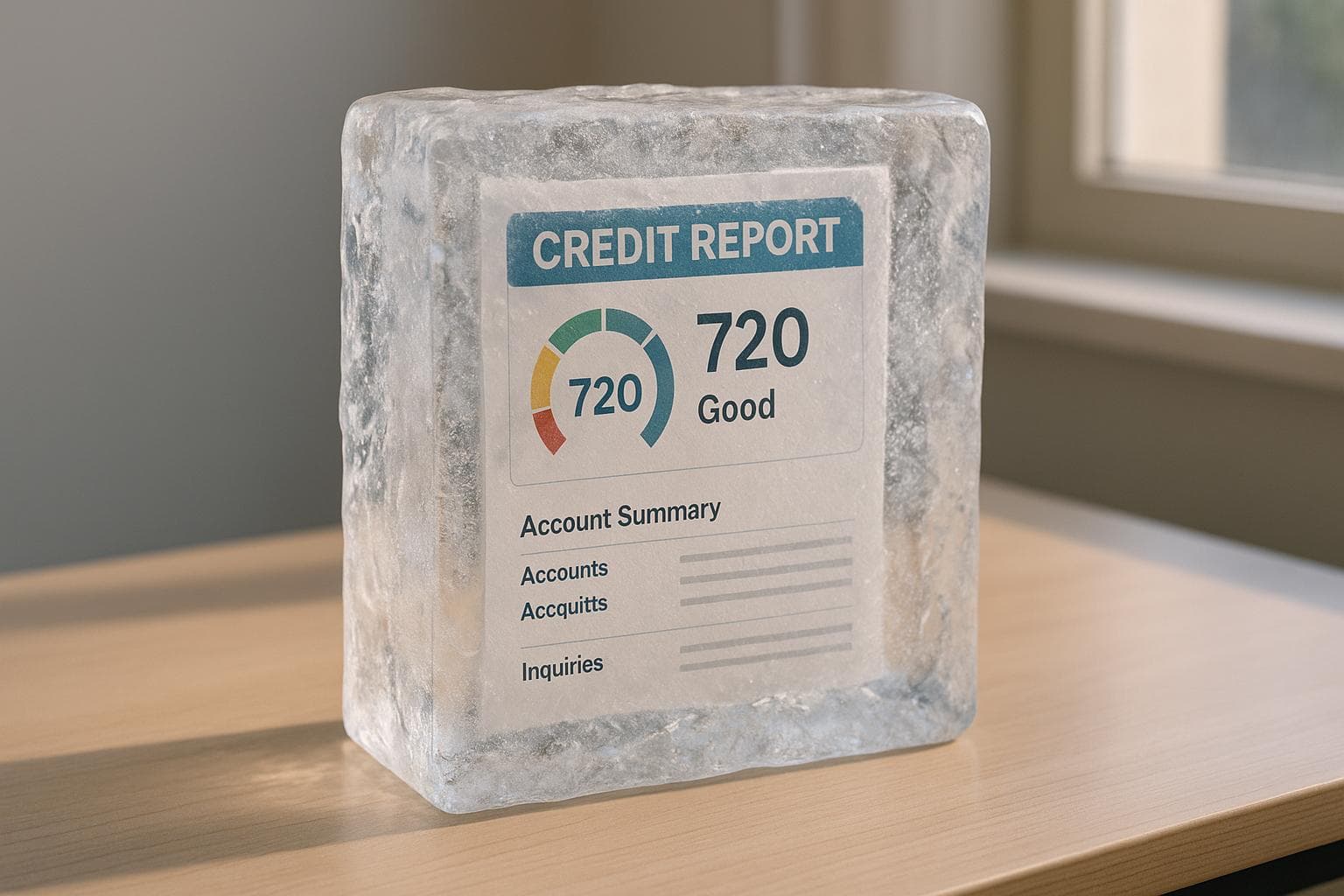
Credit freezes and fraud alerts are two free tools that protect your credit from identity theft. A credit freeze locks your credit report, blocking lenders from opening new accounts in your name. A fraud alert, on the other hand, warns lenders to verify your identity before approving credit applications. Both options are effective, but they serve different purposes:
- Credit Freeze: Best for stopping all access to your credit report. Ideal if you’re not applying for credit soon.
- Fraud Alert: Adds a verification step for lenders. Better if you’re actively applying for credit.
Key Takeaways:
- Credit freezes require contacting each credit bureau (Equifax, Experian, TransUnion) individually.
- Fraud alerts notify all three bureaus with just one request.
- Credit freezes stay in place until lifted, while fraud alerts expire after 1 year (or 7 years for extended alerts).
- Both are free and don’t affect your credit score.
If you’ve been affected by a data breach or suspect identity theft, acting quickly - with either a freeze or alert - can help secure your financial information.
Fraud Alert vs Credit Freeze: Which One Should I Use?
How Credit Freezes Work
A credit freeze locks your credit report, preventing identity thieves from opening new credit accounts in your name.
Placing, Lifting, and Removing a Credit Freeze
To set up a credit freeze, you’ll need to contact each of the three major credit bureaus - Experian, TransUnion, and Equifax - individually. Unlike fraud alerts, which automatically notify all bureaus with a single request, credit freezes require separate management with each agency.
The quickest way to handle a credit freeze is online. Each bureau provides an online portal where you can place, lift, or remove a freeze in just a few minutes. You can also make requests by phone or mail, but these methods generally take longer to process.
| Freezing Your Credit: Contact Info | ||
|---|---|---|
| Experian Online 888-397-3742 Experian Security Freeze P.O. Box 9554, Allen, TX 75013 |
TransUnion Online 800-916-8800 TransUnion P.O. Box 160, Woodlyn, PA 19094 |
Equifax Online 888-298-0045 Equifax Information Services LLC P.O. Box 105788, Atlanta, GA 30348-5788 |
If you need to apply for new credit, you’ll have to lift the freeze first. Online or phone requests to lift a freeze are typically processed within an hour. For planned credit applications, you can schedule a temporary thaw for specific dates. Once the scheduled period ends, the freeze will automatically reactivate.
What Credit Freezes Do and Don't Cover
Credit freezes are a strong defense against identity theft, as they block lenders from accessing your credit report to open new accounts. However, they don’t interfere with your existing accounts. Your credit cards, loans, and bank accounts will continue to function as usual.
Cost, Duration, and Impact on Credit Score
The good news? Freezing, lifting, or removing a credit freeze won’t cost you a dime - it’s free across all three credit bureaus. Once activated, the freeze stays in place until you decide to lift it, whether temporarily or permanently. Since a credit freeze doesn’t change your credit history or payment records, it has no effect on your credit score.
Next, we’ll explore how fraud alerts can provide an added layer of protection for your credit.
How Fraud Alerts Work
A fraud alert is a safeguard that prompts creditors to confirm your identity before approving credit applications. When a business encounters a fraud alert on your credit file, they’re required to take reasonable steps - such as calling the phone number you’ve provided or using another method - to verify it’s really you before granting credit. Unlike credit freezes, which completely block access to your credit report, fraud alerts allow creditors to review your information while signaling the need for extra verification. Now, let’s break down the three types of fraud alerts and how they work.
Types of Fraud Alerts and Their Durations
There are three types of fraud alerts, each tailored for specific situations and with varying durations:
- Initial Fraud Alert: This alert lasts for one year and is ideal if you think your personal information might have been exposed, even if you haven’t been a victim of identity theft.
- Extended Fraud Alert: Designed for confirmed identity theft victims, this alert stays active for seven years. To set it up, you’ll need to file either an FTC identity theft report or a police report.
- Active Duty Alert: Specifically for military personnel, this alert lasts one year and helps protect credit accounts while service members are deployed and may have limited access to their finances.
| Types of Fraud Alerts | Initial Fraud Alert | Extended Fraud Alert | Active Duty Alert |
|---|---|---|---|
| Cost | Free | Free | Free |
| When to Use | If you suspect potential identity theft | After filing an FTC or police report for identity theft | For active-duty service members seeking credit protection |
| Duration | 1 year | 7 years | 1 year |
| Removed from Prescreened Offers | 6 months | 5 years | 2 years |
Placing and Renewing a Fraud Alert
Setting up a fraud alert is simple. You only need to contact one of the three main credit bureaus - Equifax, Experian, or TransUnion - and they’ll notify the others automatically. This process is more convenient than a credit freeze, which requires separate action with each bureau.
Fraud alerts can be placed online, by phone, or via mail. Online requests are typically the quickest way to update your credit file.
Renewing fraud alerts is also straightforward. Initial and active duty alerts can be renewed as early as three months before they expire, ensuring uninterrupted protection. Extended fraud alerts, however, stay active for the full seven years unless you request their removal. If you want to remove any fraud alert before its expiration, you’ll need to contact all three credit bureaus individually.
Impact on Credit Activity and Cost
Fraud alerts add an extra layer of security to your credit without affecting your credit score or history. While the additional verification might slightly slow down credit applications, it’s a small price to pay for better protection against identity theft.
Additionally, fraud alerts automatically opt you out of prescreened credit and insurance offers for specific periods - six months for initial alerts, five years for extended alerts, and two years for active duty alerts. This helps minimize unsolicited marketing and reduces the risk of your information being misused.
sbb-itb-b2789ac
Credit Freeze vs. Fraud Alert: Key Differences and When to Use Each
After understanding how these tools work, it’s important to know when to use each one. While both protect against identity theft, they function in distinct ways.
Comparing Features, Functions, and Ease of Use
The main difference between a credit freeze and a fraud alert lies in how they control access to your credit information. A fraud alert adds an extra verification step for creditors, while a credit freeze entirely blocks access to your credit reports unless you provide explicit permission.
The setup process also varies. A fraud alert requires contacting just one credit bureau, which then informs the others. On the other hand, a credit freeze must be activated individually with each bureau.
| Feature | Fraud Alert | Credit Freeze |
|---|---|---|
| What it does | Notifies creditors to verify your identity before approving new credit | Restricts access to your credit report without permission |
| Setup Process | Contact one bureau; they notify the others | Contact each bureau individually |
| Duration | 1 year (initial/active-duty), 7 years (extended) | Indefinite |
| Renewal Required | Yes – expires automatically | No – remains until you lift it |
| Credit Applications | Seamless with fraud alerts, requires unfreezing with credit freezes | Requires unfreezing first |
| Protection Level | Moderate – relies on creditor verification | Strong – blocks access entirely |
These differences make each option suitable for different scenarios. Fraud alerts are easier to set up and maintain, but credit freezes offer a higher level of security by fully restricting access to your credit reports. However, that added security can be less convenient when you need to apply for new credit.
When to Use a Credit Freeze or a Fraud Alert
Deciding between a credit freeze and a fraud alert depends on your credit activity and security needs. If you don’t plan to apply for new credit anytime soon, a credit freeze might be the better choice. It’s particularly useful if you’ve been affected by a data breach, lost your wallet, or suspect your information has been compromised through phishing scams or unsecured Wi-Fi networks.
On the other hand, if you’re actively applying for credit but still want some level of protection, a fraud alert could be more practical. It allows you to open new accounts without the hassle of repeatedly unfreezing your credit, while still requiring creditors to verify your identity.
Ultimately, the decision often comes down to balancing convenience and security. If you apply for credit frequently, a fraud alert offers flexibility. But if your credit needs are minimal, the stronger protection of a credit freeze might be worth the extra effort.
Using Both Tools at the Same Time
You don’t have to choose just one - using both a credit freeze and a fraud alert together is an option, and it can provide an added layer of security. In this dual strategy, the credit freeze blocks unauthorized access to your credit reports, while the fraud alert ensures creditors take an extra step to confirm your identity before approving new accounts.
This approach can be especially helpful in high-risk situations, such as confirmed identity theft or after a major data breach. It combines the strengths of both tools, offering maximum protection while you work to resolve security issues and monitor your credit for unusual activity. Keep in mind, though, that managing both tools requires more effort. You’ll need to lift the credit freeze when applying for new credit and renew the fraud alert as needed. For those dealing with serious identity theft concerns, this extra effort can be a worthwhile trade-off for greater peace of mind.
Steps to Take After a Data Breach or Suspected Identity Theft
If your personal information has been compromised, acting quickly - ideally within 48 hours - is crucial to securing your accounts and protecting your financial well-being.
Immediate Actions to Protect Your Credit
Beyond initiating credit freezes or fraud alerts, taking swift and effective steps to safeguard your personal information is key after a breach.
Start by securing your accounts. Update your passwords, enable two-factor authentication, and consider using a password manager for added security. Confirm the breach with the company involved, and once verified, notify your financial institutions and credit bureaus immediately.
You can place a free fraud alert by contacting one of the three major credit bureaus (Experian, Equifax, or TransUnion). When you do, the alert will automatically be applied to your credit reports across all bureaus. This measure prompts creditors to verify your identity before opening any new accounts in your name - a critical step if your Social Security number has been compromised.
For even stricter protection, consider implementing a security freeze on your credit file. As James E. Lee, chief operating officer at the Identity Theft Resource Center, emphasizes:
"Freezing your credit is the single most important thing you can do when you get a data breach notice."
A security freeze restricts access to your credit report, making it significantly harder for identity thieves to open accounts in your name. Additionally, report identity theft at IdentityTheft.gov to create a tailored recovery plan.
Once your accounts are secured, the next step is to stay vigilant through continuous credit monitoring.
Monitoring Your Credit for Further Issues
After addressing the immediate risks, keeping a close eye on your credit is essential for catching any lingering or future problems.
Regularly review your bank and credit card statements to identify unauthorized transactions. Set up alerts with your financial institutions to be notified of unusual activity in real time.
Take advantage of your free annual credit reports from each of the three bureaus at AnnualCreditReport.com. Carefully review these reports for unfamiliar accounts or inquiries. If the company responsible for the breach offers free credit monitoring, evaluate the terms before enrolling. Cliff Steinhauer, director of information security and engagement for the National Cybersecurity Alliance, advises caution:
"A credit monitoring company's business is to sell my information to companies that want to buy it, unless I opt out of it... It's well-known that these companies are selling your data."
Alongside monitoring your credit, enhance your account security by enabling two-factor authentication and staying alert to phishing scams or other fraud attempts.
How CreditCaptain Can Help
While credit freezes and fraud alerts are essential after a breach, rebuilding your credit takes ongoing effort. CreditCaptain’s AI-powered platform simplifies the recovery process.
With CreditCaptain, you can manage credit disputes effortlessly. Their platform offers unlimited AI-driven tools to challenge fraudulent accounts or incorrect negative marks, eliminating the need to handle disputes manually. You’ll also benefit from a live score dashboard and AI credit monitoring that works 24/7 to alert you to any suspicious activity.
Every CreditCaptain plan includes $1 million in identity theft insurance, providing an extra layer of financial protection. Plus, their AI-powered growth tools identify the best strategies to help rebuild your credit score based on your unique situation. For more complex recovery cases, CreditCaptain offers dedicated support.
With a 90-day money-back guarantee, you can try CreditCaptain risk-free while navigating the challenges of credit recovery.
Conclusion: Protecting Your Credit Effectively
Shielding your credit is more important than ever, especially when identity theft impacts about 22% of Americans annually and costs over $10 billion a year. Credit freezes and fraud alerts are two powerful tools to help safeguard your financial reputation.
A credit freeze locks down your credit report, preventing fraudsters from opening new accounts in your name. As the FTC explains: "A credit freeze keeps people from getting into your credit report. While a freeze is in place, nobody can open a new credit account". On the other hand, fraud alerts act as a middle ground, requiring lenders to verify your identity before approving new credit applications.
If you're not planning to apply for new credit soon, a credit freeze offers robust protection. However, if you need easier access to your credit while staying cautious, a fraud alert may be a better fit. For even greater security, you can use both together to create a comprehensive defense.
Beyond these steps, maintaining long-term credit health requires more than just protection. Tools like CreditCaptain take credit management to the next level. This AI-powered platform doesn’t just protect your credit - it actively helps improve it. With over 65,000 users and a 4.6/5 rating, CreditCaptain has delivered impressive results. For example, Duane saw his credit score jump nearly 100 points, crossing the 700 mark, while Warner successfully removed a stubborn collection account after years of failed attempts.
FAQs
What should I do right away if my personal information is exposed in a data breach?
If you find out your personal information has been exposed in a data breach, it’s crucial to act swiftly to safeguard yourself. Start by securing your accounts - change your passwords immediately and enable two-factor authentication wherever you can. This adds an extra layer of protection and helps keep your accounts safe.
Next, assess what’s been compromised. Was it your Social Security number, credit card details, or login credentials? Knowing this will help you understand the risks and decide on the best course of action.
Keep a close eye on your financial accounts and credit reports for any suspicious activity. You might also want to place a fraud alert or a credit freeze with the major credit bureaus. These measures can make it harder for anyone to open new accounts in your name. If the situation calls for it, report the breach to law enforcement or file a complaint with the Federal Trade Commission (FTC). Acting quickly can limit the damage and help protect your financial security.
Can I use both a credit freeze and a fraud alert at the same time, and how do they work together?
Yes, you can use a credit freeze and a fraud alert at the same time, and doing so adds an extra layer of security against identity theft. Here's how each works: a credit freeze prevents anyone from accessing your credit report without your explicit consent, effectively stopping new credit accounts from being opened in your name. On the other hand, a fraud alert tells creditors to verify your identity more thoroughly before approving any credit applications.
Using both together offers strong protection. The credit freeze locks down your credit file, while the fraud alert ensures creditors take additional steps to confirm it's really you applying for credit. This combination is particularly helpful if you've experienced identity theft or want to safeguard your financial information as much as possible.
How do credit freezes and fraud alerts affect my ability to apply for credit or loans?
When you place a credit freeze on your account, it locks your credit report, making it inaccessible to lenders. This means no new credit or loans can be approved until you lift the freeze temporarily. While this extra layer of protection is excellent for preventing identity theft, it can slow down the process if you're applying for credit.
A fraud alert works a bit differently. Instead of blocking access to your credit report, it requires lenders to take additional steps to confirm your identity before approving any new credit. This added security measure doesn’t completely stop access but may slightly delay approvals.
Both options can help protect your credit, but they come with some trade-offs, especially if you're planning to apply for credit or loans. Think about your financial situation and how much security you need before deciding which option suits you best.